



Over the past few months, we've had dozens of conversations with C-suite executives, HR leaders, consultants, managers and organisational development professionals about the future of work.
What strikes us most isn't just the questions themselves, but the genuine curiosity and concern behind them. People aren't asking about trends for the sake of it or because they’re ‘nice-to-have-or-know-about’.
They're asking because they need to make real decisions, guide real teams and shape real workplace cultures.
So, what are people actually asking us when it comes to meta-trends?
Here are seven questions that crop up time and again.
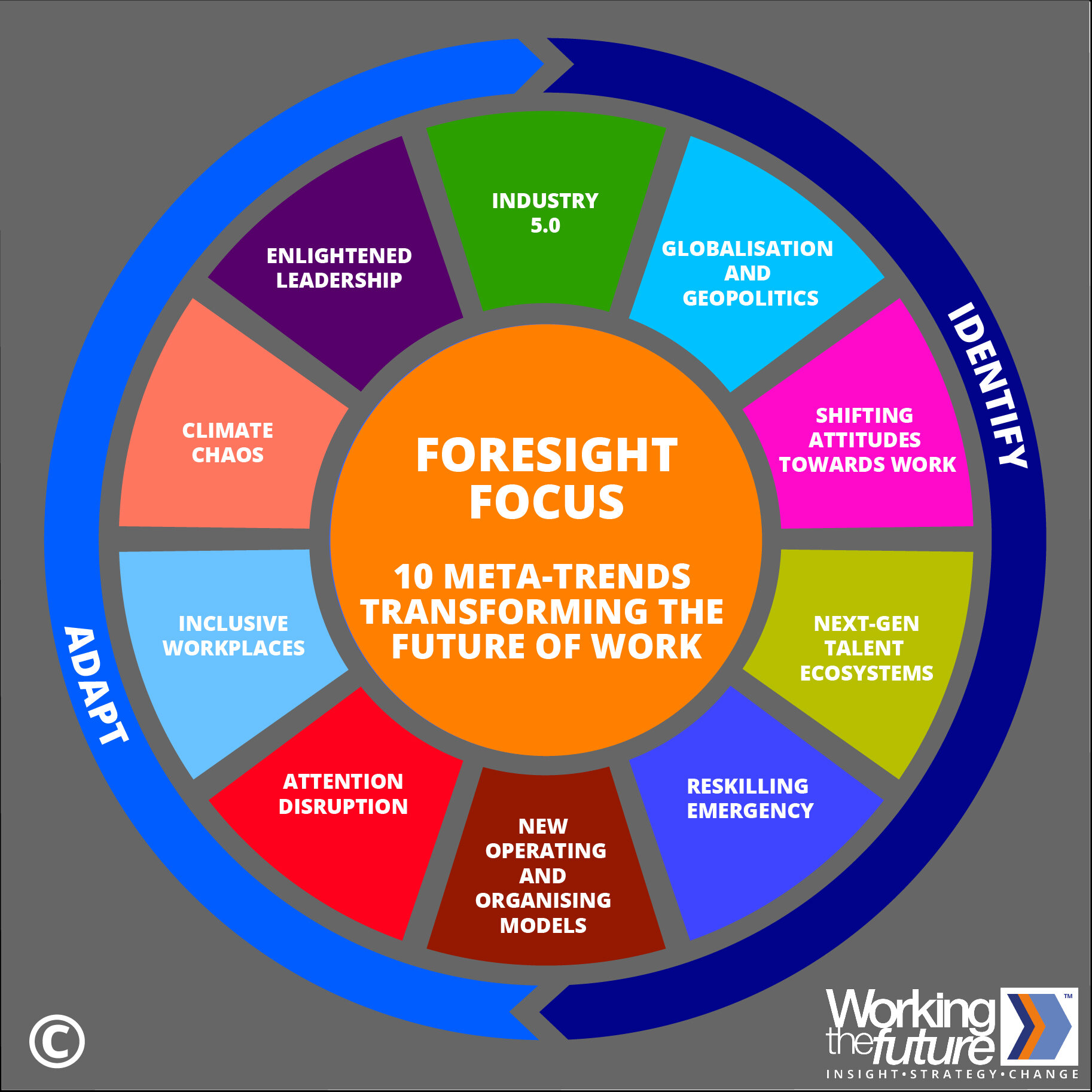
1. What exactly do we mean by future of work meta-trends?
This is where many conversations begin, and rightly so. The term gets thrown around a lot, but what does it actually encompass?
Future of work meta-trends include everything from the technologies reshaping how we collaborate, to the social and cultural shifts influencing why people choose to work where they do.
It's about understanding the macro forces (such as economic shifts, technological advancement, global events) and the socio-cultural movements (e.g. changing attitudes towards work, changing generational expectations, reskilling priorities) that are fundamentally altering the workplace landscape.
The key is recognising that these over-arching shifts aren't separate phenomena.
They're deeply interconnected, and understanding this interplay is what helps us make smarter, more human-centred decisions.
2. How should we manage a disparate, multi-generational, culturally-dynamic workforce?
This question comes up repeatedly, and for good reason. We're living through an unprecedented time where up to five generations might be working side by side. Each brings different expectations, communication preferences and career motivations.
The challenge isn't just acknowledging these differences, it's creating environments where they become strengths rather than friction points. Younger colleagues might prioritise flexibility and purpose, while more experienced team members often bring invaluable institutional knowledge and stability. The organisations thriving right now aren't trying to force everyone into the same mould. They're building cultures flexible enough to honour diverse needs whilst maintaining coherence around shared goals.
3. Is there a ‘secret sauce’ when it comes to genuine employee engagement?
Here's what we've learned: the secret is that there's no shortcut. Genuine engagement stems from people feeling that their work matters, that they're developing and that they're treated with respect and dignity.
What's changing is how we achieve this. Traditional engagement surveys and annual reviews aren't cutting it anymore. People want ongoing dialogue, meaningful feedback and the sense that their wellbeing is genuinely valued, not just when it impacts productivity metrics. The organisations getting this right are those treating engagement as an ongoing conversation, not a quarterly initiative.
4. How do we transform our organisational culture?
Culture change is hard. Anyone who tells you otherwise is selling something. But it's also essential, particularly as the external environment shifts so rapidly.
The question we hear most often is where to start. Our answer? Start with clarity about what you're actually trying to achieve and why it matters. Culture isn't changed through posters and value statements.
It's changed through consistent behaviour, leadership commitment and structures that reinforce the culture you're trying to build. It requires patience, authenticity and a willingness to confront uncomfortable truths about how things currently operate.
+ + + + + + + +
Are you thinking what we’re thinking - that keeping on top of the multiple ways in which the future of work is evolving can be A LOT?
Well, we live and breathe it, so you don't have to - and we're here to help.
We always recommend clients stay abreast of the shifts and undercurrents transforming work on at least a quarterly basis - so scroll down for more details on our emerging future of work trend analysis, our in-house trend workshops and seminars, free webinars and consultancy services in this area.
+ + + + + + + +
5. Which frameworks should we be using to make sense of all this change?
There's real hunger for practical frameworks that help leaders and teams navigate complexity. People mention VUCA (Volatile, Uncertain, Complex, Ambiguous), BANI (Brittle, Anxious, Non-linear, Incomprehensible) and various other models for understanding our current environment.
Whilst we've developed several proprietary frameworks to help our clients here at Working the Future, the truth is, no single one will provide all the answers in and of itself. What matters is finding approaches that resonate with your context and help you ask better questions. Good frameworks don't provide certainty, but they do provide useful lenses for examination. They help us organise our thinking and spot patterns we might otherwise miss.
6. How do we attract – and retain – talent in this market?
The talent landscape has fundamentally shifted. People have more choices, different priorities and higher expectations than even a few years ago. The organisations struggling are those still operating from a mindset of scarcity and control.
What's working? Flexibility, certainly. But also, clarity of purpose, investment in development, psychological safety and authentic commitment to wellbeing. People want to work for organisations that see them as whole humans, not just resources to be optimised. The good news is that smaller organisations and those with limited budgets can compete here. Culture and values often matter more than ping pong tables and free snacks.
7. How do we prepare for what's coming next?
This might be the most important question of all. The honest answer is that we can't predict the future with 100% accuracy. Nobody has a monopoly of perspective or certainty in this regard. However, we can build adaptive capacity. We can create organisations that learn quickly, that treat their people well and that stay curious and agile about what's emerging.
The organisations thriving through uncertainty aren't those with perfect five-year plans. They're those with clear values, strong relationships and the flexibility to adjust as circumstances change. They're investing in their people's development, building diverse leadership pipelines and creating cultures where it's safe to experiment and learn from failure.
So, where do we go from here?
These questions reflect something deeper than mere curiosity about trends. They reflect a genuine desire to create better workplaces, to lead more effectively and to help organisations navigate an increasingly complex world.
The meta-trends shaping our work aren't abstract forces happening somewhere else. They're playing out in your organisation right now, influencing how your teams collaborate, what your employees expect and how your culture evolves.
Understanding these trends isn't merely about predicting the future. It's about building the capacity to help better shape it. And that starts with asking the right questions, staying curious and being willing to challenge assumptions about how work should be done.
If these questions resonate with you, or if you're grappling with similar challenges in your organisation, we'd love to continue the conversation. Our upcoming free webinars on future of work trends dive deeper into these themes, exploring both the macro forces and socio-cultural shifts reshaping our workplaces.
Because the future of work isn't something that just happens to us. It's something we create together, one thoughtful decision at a time.
+ + + + + + + +
Interested in further exploring the meta-trends we continuously track? Join us for our upcoming free webinars, where we'll unpack the forces shaping the future of work and discuss practical approaches for navigating change:
- Register for our free Future of Work webinars
- Discover more about our Future of Work workshops and seminars
- Discover more about Foresight Focus
- Download our latest free Future of Work reports and guides
Alternatively, if you’d like to explore anything we've touched on in this blog or discuss any other aspects of the future of work, please do get in touch.